Omniwithdrawals
 Early Payouts
 Crypto Wallets
 Advances
 Express
 vIBAN
vIBAN Music
Music Facebook distribution
 Team Finance
 Webmon
 YouTube Playables
 Viral Music
 Influencer marketing
 Affiliate program
 About Us
 Services
 Security
 Finances
 Careers
 Blog
Blog
In fact, this is not so far from the truth 🙂 In a sense, this was demonstrated by a recent conversation between YouTube’s Senior Director of Growth & Discovery Todd Beaupré and Rene Ritchie. They talked about the main trends for 2025, but there is no point in talking about any specific recommendations after this dialogue. The main thing for you to understand is that the algorithm is not created for content creators, but for viewers, and this greatly affects the approach to working with the platform.
But it’s not that YouTube is staffed by unqualified people, quite the opposite. The problem is that firstly, perfect systems simply don’t exist, and secondly, our favorite platform’s algorithm has to rely on billions of variables, so sometimes the system won’t behave the way we want it to.
So let’s not pretend to know “that one secret” of how YouTube’s algorithm works. However, in this article, we will tell you about the trends that will allow you to understand what is needed to keep your channel growing in 2025.
The History of the Development of YouTube’s Algorithm

But first, let’s look back at the history of the algorithm’s development — this is important to understand the logic of its functioning.
At the very beginning of YouTube’s development, views were the main indicator for videos. And this was logical, given that no one expected then that the platform would become a global phenomenon. Besides, in case you don’t know, YouTube was originally developed for online dating… and in this matter, the number of views is a completely relevant indicator.
However, over time, it became clear that these numbers do not work quite as well. Creators began to use clickbait on their thumbnails and increased their indicators at the expense of users who were still naive at that time. Now we don’t fall for flashy pictures, right?
With this in mind, in 2012, YouTube introduced a new parameter to its algorithm — video viewing time. This was done specifically in order to filter out videos that users clicked on only because of the bright cover, with no intent to watch them in full.
Soon after, YouTube’s algorithm began to take into account other user activity indicators, such as likes, dislikes, comments, and the number of subscriptions after watching a video. These parameters allowed for a much better assessment of the degree of viewer engagement in viewing content and pushed creators to more actively develop their community and pay more attention to direct contact with the audience.
Then, using the capabilities of artificial intelligence, YouTube’s algorithm began to analyze the viewing history, search queries, and behavior of each user to offer content that is most likely to suit the end consumer. This practice later led to the format of the algorithm that we have today.
To put it simply, the YouTube system “sorts” users by certain parameters into a kind of “clouds” or clusters — and offers them the content that it considers most suitable based on the analysis.
Naturally, the development of the algorithm had some serious errors. One of the most significant problems arose with the introduction of YouTube Shorts in 2021, and many creators around the world felt it in their experience.
The platform, for obvious reasons, decided to start a fight with one of its main competitors, TikTok, and introduced the same format of short vertical videos. A lot of money was invested in this process, but over time, it turned out that YouTube’s algorithm did not quite correctly understand what metrics it needed to calculate to decide on recommendations.
The thing is that before Shorts, the algorithm could figure out that a person is interested in, let’s say, scientific videos, watches long lectures on quantum mechanics and is occasionally distracted by cat videos. But in the new conditions, a user could start with a video about baking cakes, then move on to an excerpt from a stand-up comedy show, learn about a new discovery in aerodynamics, and then watch a Baby Shark clip. All this within a minute. And considering that the algorithm calculated the indicators for both long videos and Shorts together, this led to a serious drop in views for all creators.
After this, YouTube had to divide the algorithm’s work into short and long videos — and over time, the problem was solved. Shorts received their own separate section, and their promotion began to take into account such metrics as the speed of gaining views and engagement in the first hours after publication.
YouTube’s algorithm is constantly being worked on, considering all changing factors, be it new devices for watching videos or video formats. That is why it is important to follow all the changes that the platform offers in order to understand in which direction to move to develop your channel. By the way, experts at Mediacube can help you with this. Our managers have been working directly with YouTube for many years and can always tell you how to improve your channel’s performance.
Want to Grow Faster on YouTube?
Get a free channel audit from Mediacube experts. Identify what’s holding you back and receive a clear action plan to boost your growth.
Get a Free AuditWhat Will Happen to YouTube’s Algorithm in 2025?
This year, YouTube has already introduced and is going to introduce some important changes that will definitely affect the algorithm, so we strongly recommend not to ignore them. And once again, you need to understand that our favorite platform is set up for users, not creators. The algorithm will do everything to retain the viewer, recommend videos that they will potentially watch, and do everything so that they stay on the website or the app as long as possible. So all you have to do is take these rules of the game into account and take the necessary actions to ensure that your videos are always first in the search results.
Automatic Video Dubbing
Perhaps the most important new feature of 2025, which can change the rules of the game in many ways. Every creator dreams of reaching an international audience (don’t you?), but in the past, this required the success of MrBeast, the services of translators and voice actors. But now, YouTube, with the help of AI, offers you automatic dubbing of videos in various languages.
If you already have a good pool of videos on your channel, then right now is a real chance to conquer new continents. Make sure that at least 80% of your content is dubbed into different languages: if you translate only one video, then the viewer will not have a reason to stay on your channel longer than its duration, right?
Yes, artificial intelligence is still far from perfect, and sometimes dubbing creates an “uncanny valley” effect, but if YouTube gives you lemons, it’s time to start making lemonade.
3-minute Shorts
This change may not be the most obvious one, but nevertheless it’s extremely important. The new rules for posting videos up to 3 minutes long came into force on October 15, 2024, but we will formally attribute it to the current year. Now, all videos that last no more than three minutes will end up in the Shorts feed — and right now it is very interesting to see what will come of this.
With the introduction of Shorts in 2020, YouTube basically entered the territory of its direct competitor, TikTok, and since then both platforms have been constantly looking for solutions for better user retention. The Chinese company at some point decided to become a “vertical YouTube” itself, increasing the allowed length of videos first to 10, and then to 15 minutes, but parity between the platforms still remains.
So why would YouTube increase the length of Shorts to three minutes after all? From the platform’s point of view, this is a very rational decision, if we take into account the logic of the algorithm’s development. YouTube makes money on advertising, which is not a secret, it’s obvious just like the sky is blue and water is wet. Therefore, the service perceives videos that last 8 minutes much better: in this case, the video can be automatically divided into two equal parts and an ad can be placed in the middle.
With this in mind, videos that do not have such a duration end up in a “gray zone” for the algorithm and are much worse indexed in the search results. Therefore, it is more ergonomic to move three-minute videos to the Shorts category, where slightly different metrics prevail than in the case of long videos. Thus, YouTube offers creators a win-win situation, where their work, although moving to another section, still brings good views and guarantees better viewer retention.
By the way, we have a guide to help you understand how YouTube shorts monetization works.
Hype Button
This is direct help from YouTube to new creators who are just starting out on the platform. The gist of this feature is as follows: if a video is posted by a creator with less than 500 thousand subscribers less than 7 days ago, viewers can “hype” it by clicking on the corresponding button. This will allow the video to get into the section of the 100 most popular videos for the week — and add both views and new subscribers.
In the future, YouTube plans to give the creators’ fans the opportunity to buy additional “hypes”, which will generate an additional source of income for them. So if you fit this description, don’t forget to remind your viewers to click the Hype button under your new videos.
Community
Another innovation from last year that should see its logical development in 2025. We can’t yet call this solution a game changer or predict its potential, but YouTube’s logic here seems clear too.
Community is an opportunity to create a closed channel for communication with your subscribers, where you can set your own rules for exchanging information and users can publish their posts and interact with each other.
The idea is clear: YouTube is once again working on retaining users on the platform in general and on your channel in particular, but for now the question is whether this feature can replace your own posts and comments under them on other social media.
However, since we are talking about the algorithm, most likely, the activity of your subscribers in Community will also influence the fact that your videos rank better in search results.
Again, let’s go back to the conversation between Todd Beaupré and Rene Ritchie. The main theme that we need to get from their dialogue is that the YouTube algorithm is tuned to users. So it’s in your best interest to do everything possible to get viewers to react to your videos, like them, visit the Community, share your videos — basically, do everything so that the algorithm understands “this video is liked by many people, it’s quickly gaining popularity, it’s being shared, so it should be offered to as many people as possible.”
Moreover, you can ask viewers to like your videos during the viewing process, not just at the beginning or end — this also affects the algorithm, and it understands that recommending your video would be a good idea.
So even if the Community doesn’t become a major success, it’s still recommended to take advantage of the features offered by YouTube, as this will likely be beneficial.
The Impact of AI and Machine Learning on YouTube’s Algorithm
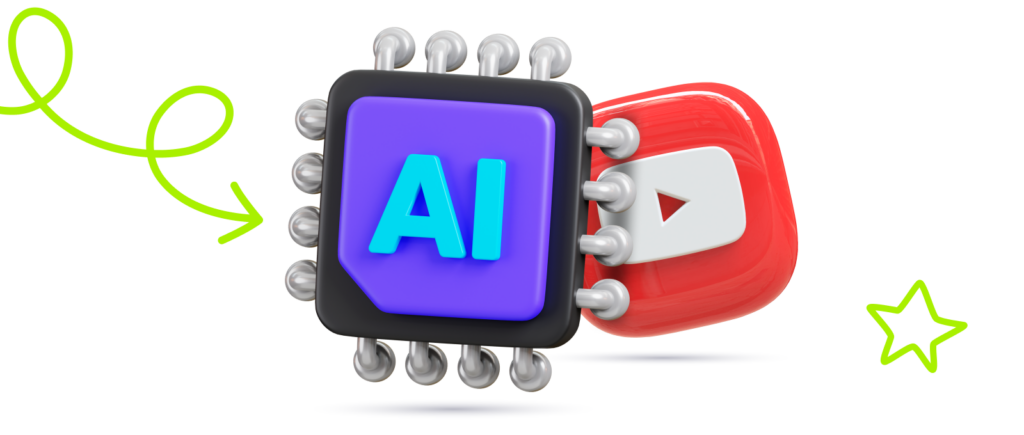
Artificial intelligence is playing an increasingly important role in the development of YouTube’s algorithm. With hundreds of hours of video uploaded to the platform every day, it would be extremely difficult for the platform’s entire system to function without the use of AI.
YouTube uses deep learning models to analyze and process huge amounts of data. These models help with speech recognition, image analysis, and video analysis. For example, the Google Brain project, which the company has been working on since 2011, is used for speech recognition on Android gadgets and video recommendations on YouTube.
Thanks to the use of artificial intelligence, YouTube automatically analyzes both the content of the video and the behavior of users — viewing history, likes, comments, and search queries. All this allows the platform to create individual recommendations and offer viewers the content that is most likely to interest them.
The same applies to content moderation: AI is actively used by the Content ID system, which is responsible for copyright protection. We talked about this in one of our recent articles.
How to get into the youtube algorithm?
To do this, let’s first use our imagination. Imagine that a robot automatically watches thousands of hours of video every second and analyzes the data with a checklist: this one is okay, that one is also okay, but there’s something wrong with this one, so I’ll give it a strike. So what should you do to make the robot pick your video? That’s right, fulfill all its requirements and thereby “win its favor.”
1. Pay attention to the title and description of the video
Not all creators pay due attention to this aspect, although in fact it is extremely important for the algorithm. Consider it the first thing the system checks — the correspondence of the description to the content of the video. Obviously, this is an echo of 2012 and the fight against clickbait.
In order to create the right title and description for a video, we usually recommend using the VidIQ service, which is available to Mediacube partners for free. There you can check which words are best to use so that the algorithm notices them faster and your video is better displayed in the search results.
Yes, this is quite painstaking work and not as fun as creating the video itself, but if you pay due attention to it, then with a high degree of probability it will affect your views for the better and you will quickly feel the outcome.
2. Maintain contact with your audience
Let’s use our imagination again: the algorithm needs to see that your video is being discussed, gets a lot of likes and reposts, that it has been “stayin’ alive” for quite some time, so it needs to be recommended.
Encourage people to comment on the video and perform all the necessary actions at the beginning and end of the video. Go to the comments section, create an active community around your channel that will constantly express their opinion about the video. This is extremely important and allows the system to detect your video among millions of others.
3. Stay up-to-date
This advice won’t work for everyone, for example, it’s hard to ask creators of historical videos to stay up-to-date. However, if you stay on trend with current events, you have a better chance of ranking as high as possible. The simplest example is if you release a video about the Oscars ceremony a month after the event itself, the algorithm is unlikely to actively promote it.
4. Thumbnails. Thumbnails. Thumbnails.
MrBeast spends an insane amount of time trying to “hack” YouTube’s algorithm, and he understands how important video thumbnails are. Two years ago, he talked about which images work and which don’t — and it became a worldwide news item.
Here’s an important tip: make several thumbnails and monitor how they work after you post the video. Right now, an A/B testing feature is already available to you, where the system itself tells you which YouTube thumbnail size will work better. But it’s completely normal to change the image if you see within an hour of posting a video that it’s not getting enough views. Right now, this is a completely normal practice on YouTube — and you can see it yourself even on MrBeast’s videos.
Yes, he’s still hungry for views.
5. Optimization
When you think about optimizing your videos, you’ll ask how to add timestamp anyway, as this is one of the basics of improving the “comfortable viewing experience” of your videos. Use other tools available to you to set up your video so that the algorithm will definitely see it. Or contact Mediacube — our experts will analyze your channel’s indicators and draw your attention to what aspects need to be improved.
6. Be consistent with your content
Here, everything is also simple: if you have a blog about travel, and then, completely unexpectedly, you post a video about archery, the algorithm will think that something is wrong with you and it’s time to pessimize your videos. Therefore, in order to do everything correctly, you should read our guide on How to Grow Your YouTube Channel.
Conclusion
Understanding the logic behind YouTube’s algorithm can be difficult at times, but the most important thing is to follow the platform’s trends and updates. It’s in the company’s best interests to have good views, so experts constantly come up with new tricks to keep the audience on the website or the app. Listen to the advice of professionals, analyze your metrics, and experiment — these are the key ingredients to success when working on YouTube.
Good luck!