Omniwithdrawals
 Early Payouts
 Crypto Wallets
 Advances
 Express
 vIBAN
vIBAN Music
Music Facebook distribution
 Team Finance
 Webmon
 YouTube Playables
 Viral Music
 Influencer marketing
 Affiliate program
 About Us
 Services
 Security
 Finances
 Careers
 Blog
Blog
YouTube Shuts Down its Trending Section
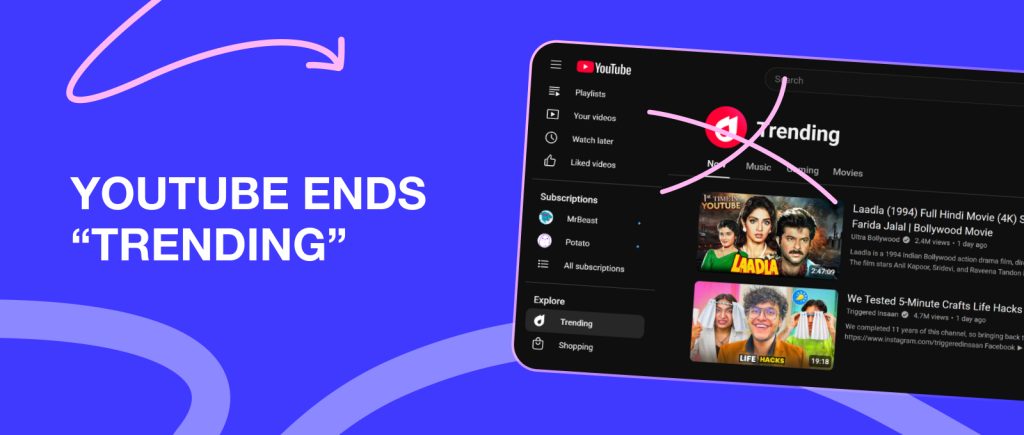
That’s right, for over 10 years we’ve all been trying to get on that page, but now we’ll have to get used to the new deal. In fact, Trending has lost much of its relevance recently, so YouTube’s decision seems logical at this point. Users now more often search for the videos they want through recommendations or search.
But, of course, the platform won’t leave us without a selection of the best content. Instead of a single list of Trending videos, there will now be thematic charts and selections by category: podcasts, music videos, trailers, and so on.
YouTube keeps up the fight against AI content

The amount of slop content created by artificial intelligence is growing rapidly on the platform, and the company has decided to tackle this problem head-on. To this end, YouTube has updated its guidelines, which now limit creators’ earnings from AI-generated videos.
The YouTube Partner Program monetization policy has already seen some changes, adding more detailed explanations about what content qualifies for monetization and what does not.
But if you’re worried that this could severely limit the monetization of certain types of videos, such as reaction videos or compilations, it’s actually not that bad. YouTube’s head of editorial policy and creator relations, Rene Ritchie, assured that the changes merely clarify the long-standing guidelines of the partner program.
YouTube let creators curse
That’s certainly quite a surprise, given the platform’s typically strict policies. However, YouTube will allow profanity after all, but only if it does not appear in the first seven seconds of the video. Previously, such materials could only claim Limited Advertising Revenue.
“We introduced this guideline to align with broadcast standards; advertisers expected ads on YouTube to have a distance between profanity and the ad that just served. Those expectations have changed, and advertisers already have the ability to target content to their desired level of profanity,” YouTube’s head of monetization, Conor Kavanagh said announcing the latest changes.
Telegram will feature ads integrated into videos, similar to YouTube.

The new format is called Banner in Video. Now, advertisements can be placed directly in videos, without pauses or distracting interjections. The developers believe that such advertising does not interfere with viewing and won’t annoy users.
Banners are placed at the bottom of the screen as a text block without covering the main content.
The base price of the placement starts at €1 per thousand impressions (CPM), and €0.5 for the Politics & Incidents categories. The character limit for the ad text is 160 characters, up to 40 characters for the headline, and up to 256 characters for the URL.
TikTok is testing a fact-checking system and new parental control tools
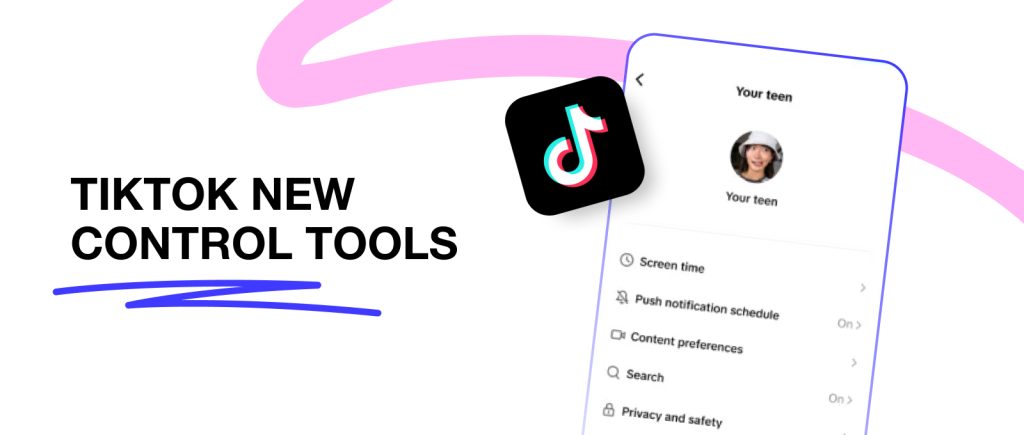
The platform launched TikTok Footnotes, a tool similar to Community Notes on X. It allows users to add explanations in the form of short notes to videos with links to verified sources, with the aim to fight the spread of fakes.
According to 9to5Mac, the feature is currently in trial mode and only available for users in the US. 80,000 people are involved in the project. At the start, only the program participants can see the notes, but if it proves itself, Footnotes will be available to all users.